Research Affiliates
» Full Listing of Research Affiliates
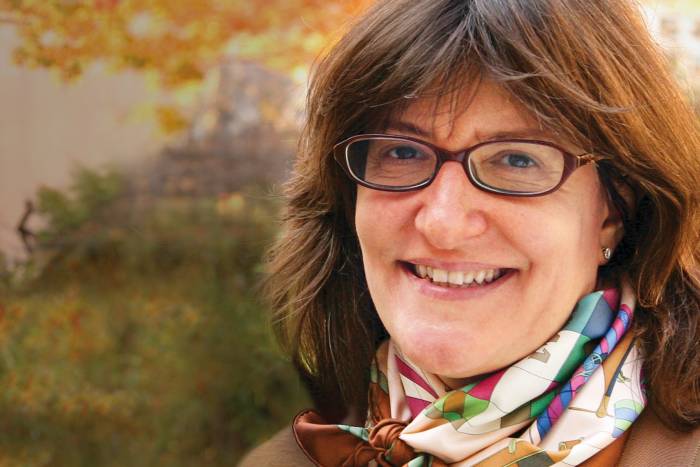
Jennifer C. Darnell, Ph.D.
Research Associate ProfessorMolecular Neuro-oncology
Jennifer.Darnell@rockefeller.edu
Dr. Darnell is a leading authority on fragile X syndrome, the most common cause of inherited mental retardation and the most common monogenic cause of autism. Fragile X mental retardation is caused by an inability of fragile X mental retardation protein, or FMRP, to bind to RNA. In the brain the FMRP RNA-binding protein is expressed specifically in neurons and harbors three RNA-binding domains: two KH domains and an RGG box. Dr. Darnell works to understand which RNA’s FMRP binds to neurons and how, once it is bound, it affects the translation of messenger RNA into proteins that are important for synaptic function.
By using a technique called in vitro RNA selection, Dr. Darnell found in 2001 that FMRP’s RGG box recognizes a complicated RNA structure called a G-quartet. She later showed that FMRP’s KH2 domain recognizes another complicated RNA structure called a kissing complex or loop-loop pseudoknot, an FMRP missense point mutation that alters a conserved isoleucine to an asparagine, which was found in a patient with fragile X syndrome in 1993. The mutation did not affect the protein’s RGG box from binding to G-quartet RNA structures, but it did abrogate the protein’s KH2 domain from binding to kissing complex RNA structures, leading to symptoms of fragile X syndrome in mice. The work helped pinpoint the molecular and genetic abnormalities that lead to abnormal FMRP regulation of messenger RNA translation.
Currently, Dr. Darnell is using a new technique developed in Robert B. Darnell's lab to study this RNA-binding protein's role in normal neurological function in mice. The technique, called high throughput sequencing cross-linking immunoprecipitation, or HITS-CLIP, provides an unbiased view of where FMRP binds to RNA across the entire genome. The work will help further an understanding of how FMRP regulates the processing of RNA and how its loss of function may lead to neurological disease.
CAREER
Dr. Darnell received her bachelor's degree in chemistry in 1985 from Bowdoin College and her Ph.D. in biochemistry from The Rockefeller University in 1990. She did postdoctoral work in the Laboratory of Signal Transduction as well as the Laboratory of Molecular Neuro-oncology at Rockefeller, where she became research assistant professor in 2001 and research associate professor in 2006. Dr. Darnell was the recipient of the National Research Service Award in 1991 and the Achievement Award for College Scientists in 1986. While at Rockefeller, Dr. Darnell was an Aaron Diamond Postdoctoral Fellow from 1992 to 1994 and a Department of Defense Breast Cancer Research Fellow from 1994 to 1998.